How Do You Design a Retail Floor Plan That Increases Sales?

A retail floor plan increases sales when it guides customers naturally toward your best-margin products, gives them room to browse without feeling crowded, and puts high-demand items where they’re easy to find. The right layout depends on your store’s size, product type, and traffic patterns, but every effective floor plan shares the same core principles: a clear entry zone, deliberate sightlines, and fixture placement that controls how customers move through the space. We’ve walked enough Miami retailers through layout planning to know that most sales lost to bad floor plans have nothing to do with the products — they’re a fixture problem.
What Is the Decompression Zone, and Why Does It Matter?
The decompression zone is the first 5 to 15 feet inside your entrance — the space where customers are still adjusting from the outside world and aren’t yet ready to make buying decisions. Shoppers in this zone move faster, look around rather than focus on the product, and are easily overwhelmed by dense signage or fixtures placed too close to the door.
This is why we tell clients not to put their best-selling display right inside the entrance. It’s usually skipped or barely noticed. Instead, use this zone for wayfinding — signage, category cues, or an open sightline into the store — and save your strongest merchandising for just past it, once customers have settled into browsing mode.
What Are the Main Retail Floor Plan Types?
Most stores use one of four layout structures, and the right one depends on your product mix and store footprint.
Grid layout.
Parallel aisles of shelving or gondola runs, best for stores with a large SKU count that need efficient stocking, like general merchandise, convenience, or grocery-style retail.
Loop (racetrack) layout
A defined path that guides customers past most of the store before reaching checkout, common in mid-size specialty retail.
Free-flow layout
Irregular, open fixture placement without a fixed path, best for boutiques that want customers to browse at their own pace.
Boutique layout
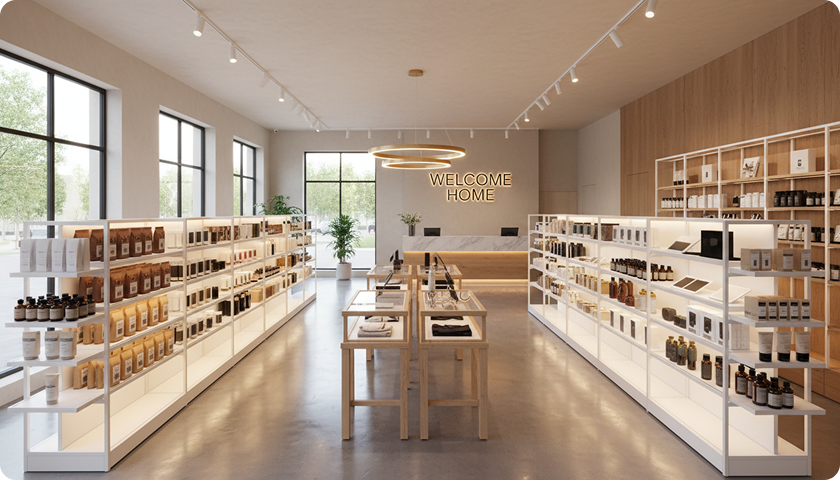
A hybrid using low-density fixture placement and featured displays near the entrance, common in apparel and gift retail where presentation matters more than stocking density.
How Do Sightlines Affect Store Layout?
Sightlines are the unobstructed views a customer has across your store from key vantage points, especially the entrance. Clear sightlines help customers quickly understand what’s in the store and where to go, reducing the hesitation that leads people to leave without browsing.
Fixture height plays the biggest role here. Lower fixtures — waist to shoulder height — near the front of the store preserve sightlines to the back wall, while taller shelving or gondola runs work better once a customer is already committed to browsing further in. One client of ours had tall gondola runs positioned directly at the entrance; simply relocating those units toward the back of the store and using lower fixtures up front noticeably increased the distance customers walked into the space before deciding to leave or stay.

Where Should High-Demand Products Go?
Store Zone
Best Fixture Type
What to Place Here
Entrance / decompression zone
Low signage, open sightlines
Category wayfinding, seasonal cues — not top sellers
Front third of store
Featured tables, low gondola, mannequins
New arrivals, seasonal merchandise, high-margin items
Middle of store
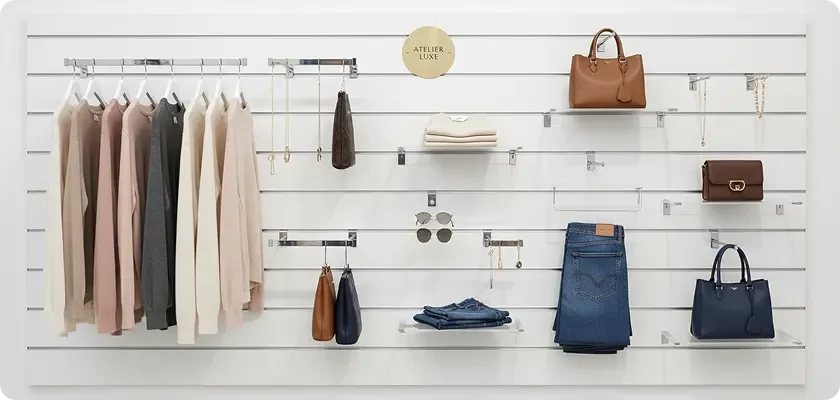
Grid shelving, slatwall, racks
Core inventory, everyday staples
Back wall
Taller shelving, statement fixtures
“Destination” items customers already intend to buy
Checkout / cash wrap
Counters, small displays
Impulse buys, add-on items
The logic behind the back-wall placement is called the power wall or destination placement strategy: putting a product customers already want at the back of the store forces them to walk past everything else to reach it, increasing exposure to the rest of your inventory along the way.
What You Should Know Now
A retail floor plan isn’t just about fitting fixtures into a space; it’s about controlling how customers move, what they see first, and where their attention lands. Getting the decompression zone, sightlines, and product placement right turns a floor plan from a storage layout into a sales tool.
Frequently Asked Questions
What is the best floor plan for a small retail store?
For stores under roughly 1,500 square feet, a free-flow or boutique layout usually works better than a grid, since tight aisles between gondola runs can feel cramped rather than efficient. Lower-profile fixtures, wall-mounted slatwall, and a few featured tables let you display more without crowding walkways.
How much walking space should be between fixtures?
A minimum of 36 inches between fixtures is standard for basic accessibility and comfortable two-way foot traffic, with wider main aisles — often 48 inches or more — recommended near entrances and checkout. Exact code requirements vary by municipality, so confirm ADA and local building requirements for your specific space.
Should checkout be near the entrance or the back of the store?
Either can work, but placing checkout toward the back or side (rather than directly at the entrance) tends to pull customers further into the store before their transaction, increasing exposure to additional merchandise. The right choice ultimately depends on your store’s size, staffing, and security considerations.
Not Sure Which Fixtures Fit Your Store?
Miami Display offers custom store layout planning, including on-site measurements for local stores and a design draft tailored to your product mix and traffic flow. We’ll work through fixture placement with you before you commit to a single unit.